
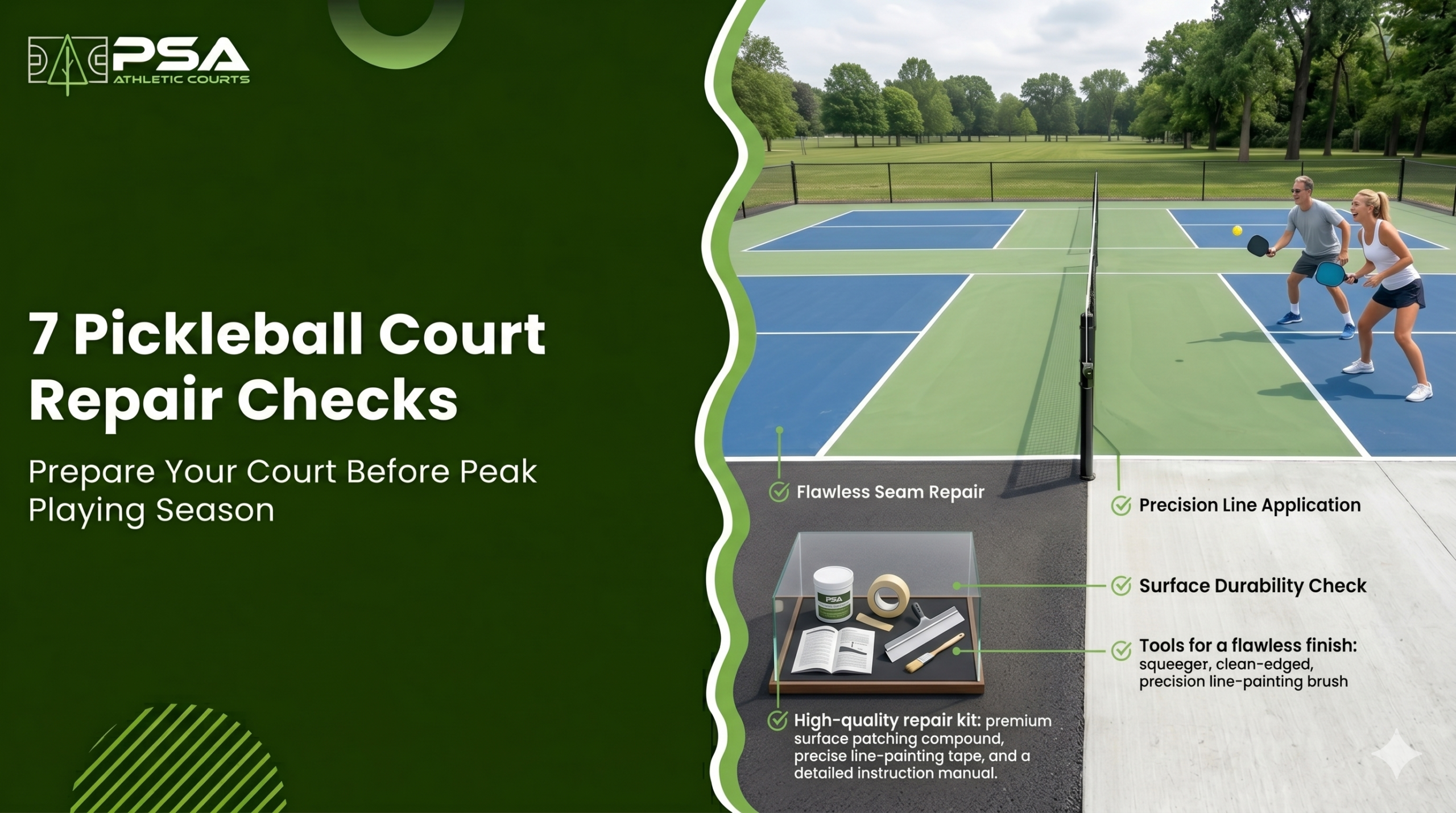
As the weather improves and pickleball courts become busier, preparing your playing surface before peak season is one of the smartest investments you can make. Whether you manage a residential court, sports club, school, HOA, or public recreation facility, regular pickleball court repair helps maintain player safety, improves court performance, and prevents minor issues from becoming expensive repairs.
Many court owners wait until cracks become severe or the playing surface starts affecting ball bounce before taking action. However, routine inspections before the busiest months can significantly extend the life of your court and reduce maintenance costs.
From surface cracks to fading coatings, this guide covers seven essential repair checks every property owner should complete before the season begins.
1. Inspect the Court Surface for Cracks
Small cracks are one of the earliest signs that a pickleball court needs attention. While they may seem harmless at first, they allow moisture to penetrate beneath the surface, especially during freeze-thaw cycles. Over time, these small imperfections can expand and weaken the court’s foundation.
Walk across the entire playing surface and inspect:
- Hairline cracks
- Wider structural cracks
- Separation around expansion joints
- Areas where cracks appear to be spreading
Addressing minor damage early makes repairs simpler and less expensive than waiting until larger sections require reconstruction.
According to experienced court specialists such as Pine State Courts, early crack repair is one of the most effective ways to extend the lifespan of a pickleball court.
2. Check for Low Spots and Standing Water
After rainfall, observe how water behaves on the court.
If puddles remain for an extended period, the court may have:
- Poor drainage
- Surface depressions
- Base settlement
- Improper slope
Standing water not only accelerates surface deterioration but also creates slippery playing conditions and encourages premature coating failure.
Professional repairs often include correcting low areas before resurfacing so water drains efficiently away from the court.
3. Evaluate Surface Coating Wear
The acrylic coating protects the underlying court structure while providing traction and consistent ball bounce.
Over time, you may notice:
- Fading colors
- Worn texture
- Smooth slippery areas
- Exposed asphalt or concrete
These are common signs that pickleball court resurfacing should be considered.
Resurfacing restores both appearance and playability while protecting the base from further weather damage.
For many courts, resurfacing every few years is considerably more cost-effective than waiting until major structural repairs become necessary.
4. Inspect Court Lines and Playing Accuracy
Court markings are essential for both recreational and competitive play.
Before peak season, verify that:
- Boundary lines remain clearly visible
- Kitchen lines are accurate
- Paint has not faded significantly
- Line edges remain sharp
Faded or inaccurate markings affect gameplay and may require restriping during resurfacing.
A professionally resurfaced court includes fresh, regulation-compliant line markings that improve both appearance and player confidence.
5. Examine the Net System and Court Accessories
Surface repairs should always include an inspection of equipment.
Check:
- Net tension
- Net height
- Post stability
- Anchoring hardware
- Protective padding
Loose or damaged equipment can create safety hazards even if the court surface is in excellent condition.
Routine inspections help identify worn hardware before heavy seasonal usage begins.
6. Assess the Condition of the Court Material
Different pickleball court materials require different maintenance schedules.
Common court surfaces include:
- Acrylic-coated asphalt
- Concrete with acrylic coating
- Modular sports tiles
Each material responds differently to weather, UV exposure, and daily play.
For example, asphalt courts may develop surface cracks more quickly if drainage is poor, while concrete courts require close monitoring for expansion-related cracking.
Understanding how your specific court material performs helps determine whether simple repairs, resurfacing, or more extensive maintenance is appropriate.
Property owners should also evaluate surrounding landscaping, drainage systems, and nearby trees that may contribute to long-term surface damage.
7. Schedule Preventative Maintenance Before Peak Season
One of the biggest mistakes court owners make is waiting until the busiest months to schedule repairs.
Professional maintenance before peak season allows contractors to:
- Repair cracks
- Clean and prepare the surface
- Apply acrylic coatings
- Improve traction
- Complete restriping
- Address drainage concerns
Scheduling work early minimizes facility downtime and ensures the court is ready before player demand increases.
Reviewing a professional pickleball court resurfacing guide also helps property owners understand when resurfacing is appropriate and what to expect during the process.
For homeowners, schools, municipalities, and sports facilities looking to maximize court lifespan, experienced teams like Pine State Courts provide comprehensive inspection, repair, and resurfacing services tailored to New England’s challenging climate.
Why Preventative Court Maintenance Matters
Regular inspections do more than improve the appearance of your court—they help protect your investment.
Preventative maintenance can:
- Extend court lifespan
- Improve player safety
- Maintain consistent ball bounce
- Reduce costly structural repairs
- Protect the underlying foundation
- Keep the court looking professional throughout the season
Addressing small issues early almost always costs less than waiting for major repairs.
Final Thoughts
Preparing your pickleball court before peak playing season ensures players enjoy a safer, smoother, and more consistent playing experience. By inspecting cracks, drainage, surface coatings, court markings, equipment, and overall court condition, you can identify problems before they become expensive repairs.
Whether your court requires minor maintenance or complete pickleball court resurfacing, taking action before the busy season begins will help maximize its lifespan and reduce long-term maintenance costs.
Working with experienced professionals ensures repairs are completed correctly, allowing your court to remain in excellent condition for many seasons to come.